

Handling Clients Professionally
In the world of business, professionalism is not measured by how politely we treat easy clients, but by how calmly we handle difficult situations. A young entrepreneur named Daniel ran a small company that designed websites for local businesses. He was passionate...
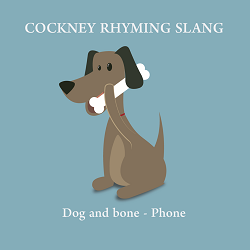
Cockney
¿Sabes qué es el cockney rhyming slang? Es una forma de expresión muy común en algunos barrios londinenses que se caracteriza tanto por su acento como por sus rimas. Esta jerga rimada se construye sustituyendo una determinada palabra por otra que rima con ella y que...

Modal verbs
¿Qué son los modal verbs? Los modal verbs o verbos modales son un tipo de verbos auxiliares, es decir, que siempre van acompañando a un verbo principal cuyo significado matizan o modifican. Y ¿qué peculiaridades tienen los modal verbs? No tienen...

English is not merely a language
it is a bridge that connects people, cultures, and ideas across the world. Learning English opens the door to countless opportunities, allowing individuals to communicate confidently, explore new knowledge, and express their thoughts with clarity. Every word we learn...

Cómo hacer una redacción en inglés correctamente
La importancia de una buena redacción en inglés Hacer una buena redacción en inglés es una habilidad cada vez más importante. Hay que saber adaptarse a cualquier situación para escribir de una manera natural y eficaz, porque ¿quién sabe? Igual llegará un día en el que...
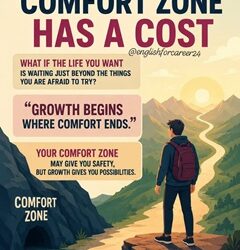
Your Comfort Zone Has a Cost
What if the life you want is waiting just beyond the things you are afraid to try? Comfort feels safe. It protects you from uncertainty, mistakes, embarrassment, and failure. But have you ever asked yourself what you might be losing by always choosing what feels easy?...

HOMOPHONES
Homophones are a delightful feature of the English language, adding both charm and challenge to communication. These are words that sound the same but differ in meaning and spelling, such as “flower” and “flour” or “sea” and “see.” They remind us of the richness and...

THE CLIMB WITHIN
There was once a young man who lived in a small town surrounded by hills. Every day, he would look at the tallest hill and wonder what it felt like to stand at the top. People often told him it was too steep, too tiring, and not worth the effort. Yet, something inside...

The Ugly Duckling’s Secret Magic Weapon!
In a quiet pond surrounded by tall reeds, a strange duckling hatched from an oversized egg. He looked different from the others. His neck was longer, his feathers were gray, and his body seemed awkward. The other ducklings laughed. "Why can't you look normal?" they...

What if your biggest regret in life ends up being the things you never tried?
Most people don’t fail because they lack talent or potential they fail because fear keeps them stuck. Fear of making mistakes, fear of being judged, fear of starting before feeling “ready.” So they keep waiting for the perfect moment while opportunities quietly pass...